The next part of this chapter follows Carnassial and his prowl. After leaving the island, Panthera, a felid who was once a companion to Carnasssial, returns to him. The prowl then travels north, until they finally find a place to call home.
The next chapter, The Feast, sees Dusk and his colony, as they prepare for a "feast", organized by their new hosts. It turns out to be a trap though, and that the tree runners intended to feed the chiropters to another large creature, a diatryma, who demanded food from the tree runners in return that the creature will protect them.The chiropters barely escaped, this time with several casualties.
After wards we follow Carnassial and his prowl, as they meet another new creature, called a hyaenodon, which are four times the size of felids, and are also carnivores. They seek the help of the felids to hunt for saurian eggs, which still remained even though they thought the saurians were gone. The two groups form an alliance.
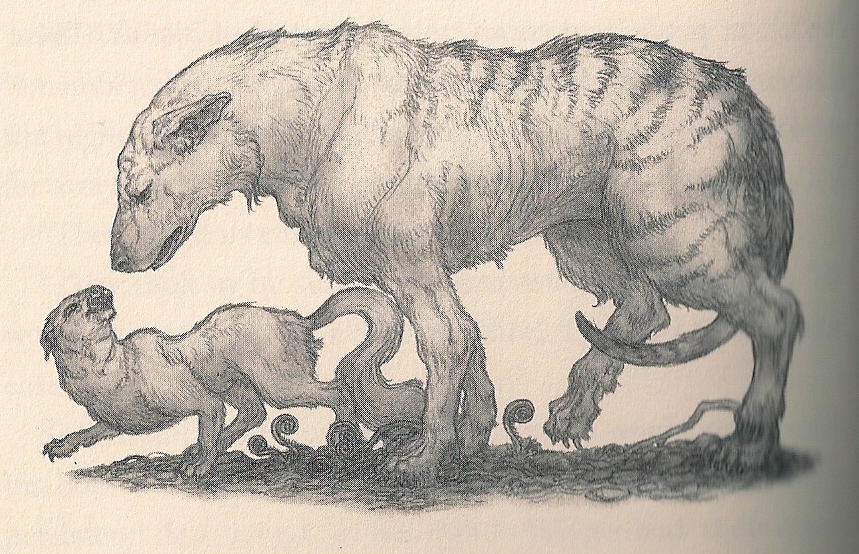 |
| A comparison of size between Carnaissial (on the left) and a hyaenodon (on the right) |
Once again, from reading these two chapters, I saw Maslow's Hierarchy of Needs in action. This was shown in Dusk's colony, and Carnassial's prowl, as they searched for a new. They needed food, security, shelter, and safety, which they attempted to find as they traveled along the mainland, and eventually found it.
Another thing I noticed too, were the primary and secondary concerns. I noticed how after the saurians became extinct, that all of the other creatures, no longer preyed upon by predators, began to flourish. This resulted less food and land for all of the creatures. This was what happens when their primary needs are over satisfied (food, shelter, etc). As a result of this over satisfactions, there was now poverty, some violence, and inequality.
